Industrial Solar • Pithampur & Indore
Industrial Solar Installation in Pithampur for Factories & Businesses
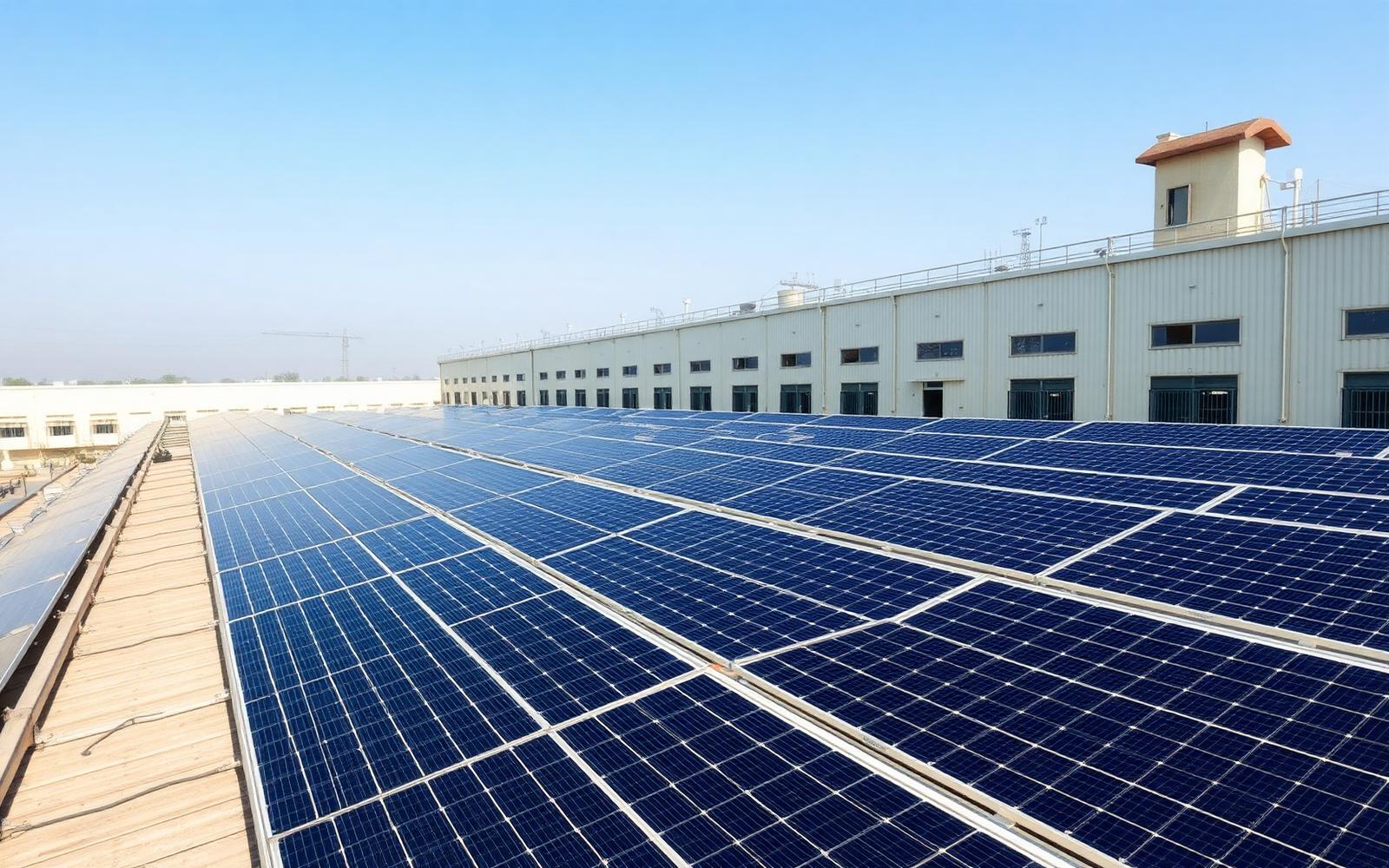
SurDev Energy engineers and installs industrial rooftop solar plants for factories, manufacturing units, warehouses and industrial facilities in Pithampur and around Indore. Every project begins with a load and bill review plus an on-site roof and structural assessment, so the plant is sized to how your facility actually draws power.
- 75 kW on-grid plant installed in Pithampur
- Load, bill and structural assessment first
- Shed and RCC roof mounting design
- Documentation and approval assistance
- AMC, cleaning and monitoring after handover
Quick Answer
Industrial Solar Installation in Pithampur
SurDev Energy installs industrial solar plants for factories, manufacturing units, warehouses and industrial facilities in Pithampur and Indore. An industrial project typically requires a review of billed units and shift-wise load, an on-site roof, shading and structural assessment, capacity sizing, engineering design, connection and metering documentation, installation, commissioning and a maintenance plan. Load and site assessment matters because capacity is limited by what the roof can carry and what your connection permits, not by roof area alone. Share your electricity bill to begin.
Who It's For
Industrial facilities we install for
Manufacturing plants
Continuous daytime machine load makes plant roofs among the most suitable industrial solar sites.
Processing & fabrication units
Process heating, compressors and motors run in generation hours, so self-consumption stays high.
Warehouses
Large uninterrupted sheet roofs with low internal load can still host sizeable capacity.
Logistics & distribution facilities
Dock lighting, conveyors and cold rooms are assessed against available roof span.
Industrial sheds & auxiliary blocks
Multiple shed roofs can be combined into one plant with a shared inverter layout.
Large commercial facilities
Facilities with industrial-category connections and wide roofs are engineered the same way.
Feasibility
What determines whether an industrial solar plant is feasible?
Industrial feasibility is decided site by site. These are the factors our engineers verify before proposing any capacity for a facility in Pithampur or Indore.
Monthly units consumed
6–12 months of billed kWh is the primary sizing input for an industrial plant, not roof area alone.
Daytime load profile
Shift pattern matters. The share of consumption inside generation hours decides how much of the output is used on site.
Sanctioned load & connection category
LT or HT industrial category and sanctioned load influence the capacity that can be applied for.
Roof and land availability
Usable shadow-free area after skylights, extractors, walkways, ducting and setbacks defines practical capacity.
Roof condition & structure
Sheet thickness, purlin spacing, span and existing corrosion are checked before any mounting design is finalised.
Structural suitability
Added dead load and wind uplift on large shed roofs are evaluated as part of the survey.
Shading sources
Adjacent taller sheds, chimneys, stacks, towers and trees are mapped on site.
Electrical infrastructure
Panel room space, breaker capacity, cable routes, earthing and protection feasibility for the plant size.
System sizing
Final capacity is the smallest of what consumption justifies, what the roof carries and what the connection permits.
Connection & metering feasibility
Applicable DISCOM process and documentation for your connection category, confirmed before the proposal.
Operational constraints
Production shutdown windows, crane and material access, and hot-work permissions shape the installation plan.
Long-term O&M plan
Industrial dust levels dictate cleaning frequency and monitoring requirements from day one.
Project Proof
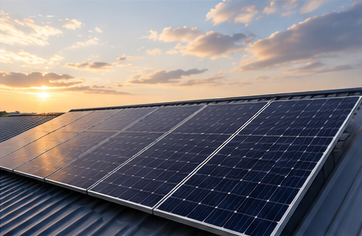
75 kW on-grid plant, Pithampur Industrial Area
This is one of our commissioned installations in Pithampur Industrial Area — a 75 kW on-grid rooftop plant on an industrial facility. The photograph is from our own project site. We can walk you through the structure, layout and electrical approach used there during your assessment.
- LocationPithampur
- Capacity75 kW
- TypeOn-grid rooftop
Process
Our industrial solar project process
- Step 1Requirement discussion with the plant or facility team
- Step 2Electricity bill and load review
- Step 3Industrial site assessment
- Step 4Roof and structure evaluation
- Step 5Shadow analysis and layout planning
- Step 6System sizing and engineering design
- Step 7Commercial proposal with scope and warranties
- Step 8Documentation and approval assistance
- Step 9Installation by our crew
- Step 10Testing, commissioning and handover
- Step 11Monitoring, AMC and cleaning support
What affects industrial solar project cost?
Industrial plants are quoted per project, not from a published rate card, because scope changes substantially between one shed roof and another. These are the drivers we price against:
- Plant capacity in kW
- Panel technology and module wattage
- Inverter configuration — string or central
- Mounting structure design for the roof type
- Roof complexity, height and access
- Cable runs and electrical scope
- Civil and structural requirements
- Safety equipment and protection devices
- Installation scope and site conditions
- Monitoring and O&M requirements
What project economics depend on
- Your industrial electricity tariff
- Load profile across shifts
- Share of generation consumed on site
- Installed system size
- Operating pattern and plant utilisation
We do not publish a fixed payback or return figure for industrial plants, because it changes with tariff, load pattern and capacity. For general cost context across system sizes, see our solar installation cost guide for 2026.
How industrial solar differs from smaller commercial installations
Industrial projects work at a different scale of load and roof area, which changes the engineering. Larger capacities mean more strings, heavier cable and protection design, and closer coordination with the plant's electrical infrastructure. Shed roofs with long spans and machine vibration need mounting and fastening decisions that a small RCC rooftop never raises. Installation has to fit around production schedules and material-access constraints, and maintenance planning — cleaning cycles in particular — is part of the design conversation rather than an afterthought.
If your property is an office, showroom, school or a smaller business building rather than an industrial facility, commercial solar installation in Indore is the better fit. For our full city-wide scope, see solar installation in Indore.
Long-term performance and O&M for industrial plants
Industrial locations carry more airborne dust than residential rooftops, so soiling losses and string-level faults are the two things that quietly reduce output. After commissioning we offer scheduled cleaning, annual maintenance plans, and diagnostic checks on underperforming systems, carried out by the same team that installs.
Why SurDev Energy
Why industrial buyers work with us
Indore-based, Pithampur-experienced
Our engineering and installation team works out of Indore and has commissioned a 75 kW on-grid plant in Pithampur Industrial Area.
Assessment before any capacity is quoted
Bill review, roof survey, shadow mapping and structure check come first — no per-kW number before the site is seen.
Tier-1 components
Tier-1 modules, reputed inverter brands and galvanised structures with manufacturer warranties.
Documentation support
We assist with connection and metering paperwork for your category and hand over project documents at commissioning.
In-house O&M
Cleaning, AMC and performance diagnostics run by the same team that installs the plant.
Direct WhatsApp channel
Project updates and post-commissioning queries answered directly on WhatsApp.
More on our team and engineering approach on the about SurDev Energy page, and local context in our Pithampur solar guide.
FAQ